Riding a Motorcycle in Morocco in Winter: What to Expect from December to February
While most of Europe puts its bikes away for the winter, Morocco is still riding. December to February brings clear skies, empty roads and the Sahara at its most comfortable. The catch is the High Atlas: the mountain passes get cold, and sometimes snow.
This guide explains what winter riding in Morocco is really like, region by region, and how to prepare. For a month-by-month view of the whole year, see our best time to ride in Morocco guide.
Why ride Morocco in winter?
- You keep riding when home is grey. A short flight from most of Europe swaps wet roads for sunshine.
- The desert is at its best. The Sahara is far too hot for comfortable riding in summer. In winter the days are warm and pleasant.
- Quieter roads and hotels. Outside the Christmas and New Year week, you share the passes and kasbahs with far fewer tourists.
- Big contrasts in one trip. In a single day you can ride from snowy peaks down to palm oases.
What the weather is like, region by region
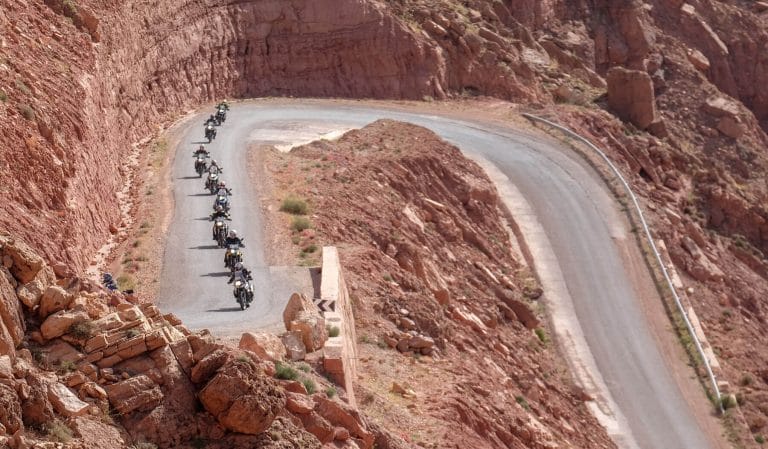
The High Atlas passes. This is where winter bites. Tizi n’Tichka, the main pass between Marrakech and Ouarzazate, tops out at about 2,200 metres. It gets regular snow in winter, and the gendarmerie sometimes close it for a few hours or days when the road is dangerous. Tizi n’Test, further west, is higher and more remote (read our Tizi n’Test guide). Expect cold mornings at altitude even on sunny days.
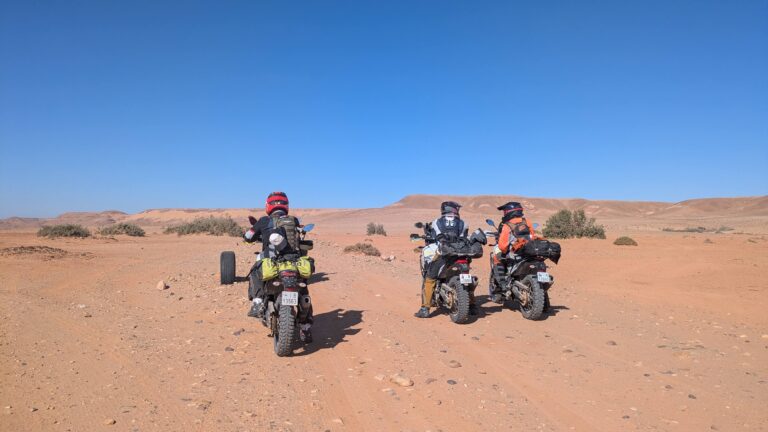
The Sahara and the south. Days are sunny and warm enough to ride in a light layer. Nights in the desert are cold, especially in a desert camp, so bring a warm layer for the evening.
The Atlantic coast. Mild and often breezy. Essaouira and Agadir are pleasant all winter, which makes the coast a good alternative if the mountains are closed.
How we plan winter tours
Our tours run from September to May, so winter is part of the normal season. Two things make the difference in December to February:
- A weather alternative. On tours with three or more riding days, your guide can switch to a lower route if a pass is closed or snowy. A tour with only two riding days has no room for that switch, so for a winter trip choose a tour with at least three riding days.
- A support car. Your luggage travels in the support car, so extra layers and spare gloves are never far away as the altitude changes.
The Atlas & Sahara tour (9 days, 7 riding days) is a classic winter choice: it spends most of its time in the south, with a night in a luxury desert camp in the Merzouga dunes.
What to pack for a winter ride
- A thermal base layer and a warm mid-layer you can take off at lunch
- Winter gloves for the passes plus a lighter pair for the desert
- A neck warmer or buff
- A Pinlock or anti-fog visor insert for cold mornings
- Waterproof over-gear: rain is not common, but it happens on the Atlas
- A warm jacket or fleece for evenings in the desert camp
Full riding gear is available from us on request if you prefer not to fly with yours.
FAQ
Is Tizi n’Tichka open in winter? Usually yes. It is a main road and is cleared after snowfall, but it can close for short periods after heavy snow. If it is closed, your guide takes the weather alternative.
Is it too cold to ride in Morocco in January? Not in the south or on the coast. Mornings on the high passes are cold, so dress in layers.
When do winter tours run? See the tours calendar for departures from December to February, or ask us about a private tour on your own dates.