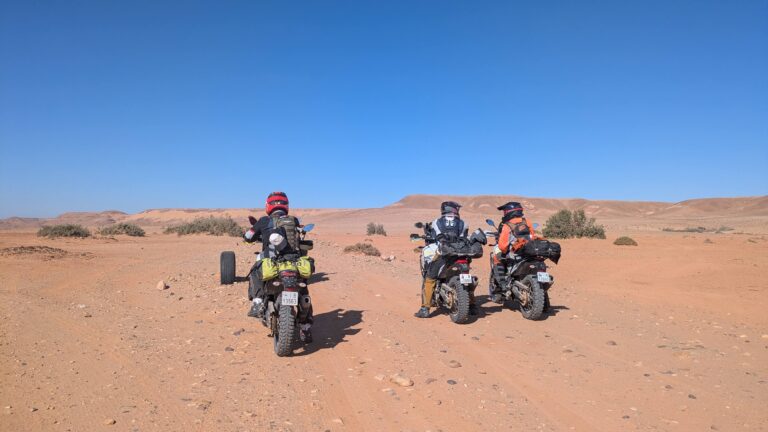
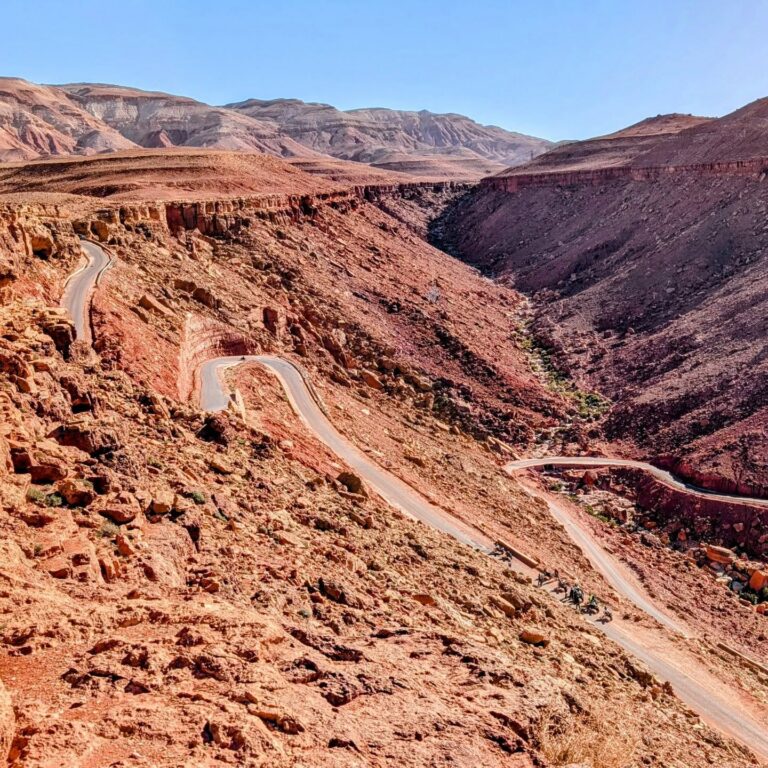
Morocco is one of the best motorcycling countries in the world, and one of the easiest to reach from Europe. But it is not the Alps. Traffic works differently, the money is different, and the road can change from new tarmac to gravel in the space of a bend. These are the 12 things we tell every first-time rider before their tour.
Paperwork and money
1. Bring your full motorcycle licence: Foreign licences are accepted for short visits. An International Driving Permit is recommended for everyone and required for UK riders (the 1968 IDP). Carry the original licence, not a copy.
2. The dirham is a closed currency. You cannot buy Moroccan dirhams properly before you travel, and you can only take a small amount in or out (around 2,000 MAD). Bring euros or pounds and change them in Marrakech, or withdraw from ATMs, which are easy to find in towns. Keep exchange receipts if you want to change dirhams back.
3. Cash is king outside the cities. Fuel stations, village cafés and small shops often take cash only. Carry enough for lunches, fuel and tips for a couple of days.
4. Get travel insurance that covers motorcycling. Your tour includes insurance for the bike; your own travel policy needs to cover you as a rider, at the engine size you will ride.
On the road
5. Expect the unexpected in towns. Scooters filter everywhere, grand taxis stop without warning and pedestrians cross anywhere. Ride defensively and leave more space than at home. Once you are out of the cities, traffic thins out dramatically.
6. Roundabouts can feel backwards. Traffic entering a roundabout often behaves as if it has priority. Approach slowly and make eye contact.
7. Police checkpoints are normal. You will pass regular checkpoints at town entrances. Slow right down, stop if waved in, smile and have your documents ready. On our tours the guide does the talking.
8. Speed limits are enforced. Radar checks are common, especially entering villages, where limits drop sharply. Fines are paid on the spot.
Fuel, food and kit
10. Fill up when you can. In the mountains and the south, stations can be 100 km or more apart. On guided tours we plan every fuel stop.
11. Pack for four seasons. You can start a day at a frosty 2,000-metre pass and finish it in 30°C desert. Bring layers, a waterproof and summer gloves as well as winter ones.
12. Respect local customs. Dress modestly off the bike, ask before photographing people, and learn a few words: “salam” (hello) and “shukran” (thank you) go a long way. Moroccans are among the most welcoming people you will meet.
Is Morocco safe for motorcycling?
Yes, for riders with sensible road skills and a defensive style. Most of our riding is on quiet roads with excellent tarmac, and riders consistently tell us the country felt safer and friendlier than they expected. The biggest risks are the same as anywhere: speed, fatigue and unfamiliar traffic. A guided tour removes most of the guesswork, and our pre-ride briefing every morning covers that day’s road and any hazards.
New to riding off tarmac? Our riding trainings with a BMW Motorrad certified instructor are the best preparation.
Your first Morocco ride
If this is your first time, the Long Weekend (3 riding days, about 700 km, from €1,900) or the coastal Sea and Sun are the easiest introductions. More questions? Read our FAQ.
FAQ
Do I need an International Driving Permit to ride in Morocco? It is recommended for all riders. Always carry your original licence too.
Can I pay by card in Morocco? In hotels and city shops, usually yes. Fuel stations and village cafés often take cash only.
Is Morocco safe for motorcycling? Yes, for riders who ride defensively. Most rural roads are quiet and well surfaced; towns need extra care.
Which side of the road do they drive on in Morocco? The right, as in mainland Europe.
What should I pack for a Morocco motorcycle tour? Layers for cold mornings and hot afternoons, a waterproof, two pairs of gloves and cash for lunches and fuel. Full riding gear can be provided on request.